In this article
- What Exactly Is a YouTube Outlier? (The Math)
- Why Outliers Are the Holy Grail for Small Creators
- The 4 Psychological Anatomy Triggers of a 10x Outlier
- 1. The Asymmetric Conflict (David vs. Goliath)
- 2. The Unsolved Historical or Technical Paradox
- 3. The Hidden Mechanism Behind Common Objects
- 4. Extreme Stakes with a Countdown Clock
- The Proven Title Frameworks of Breakout Videos
- Framework A: "The [Subject] That [Unexpected Action] (And [Dramatic Consequence])"
- Framework B: "Why Nobody Talks About [Entity]'s Biggest [Mistake/Secret]"
- Framework C: "How [Underdog] Built [Enormous Result] With [Absurdly Tiny Resource]"
- How to Ethically Swipe an Outlier (Without Copying)
- 3 Thumbnail Rules from Outlier Videos
- Conclusion: Stop Guessing, Start Analyzing
Every day on YouTube, a curious phenomenon happens that defies conventional algorithm wisdom.
A small, quiet channel with 8,000 subscribers and an average view count of 1,200 views uploads a video. Within 72 hours, the video catches fire, climbing to 45,000, 150,000, or even 500,000 views.
The creator didn't run ads. They didn't get a shoutout from MrBeast. Their previous five videos barely broke 1,000 views.
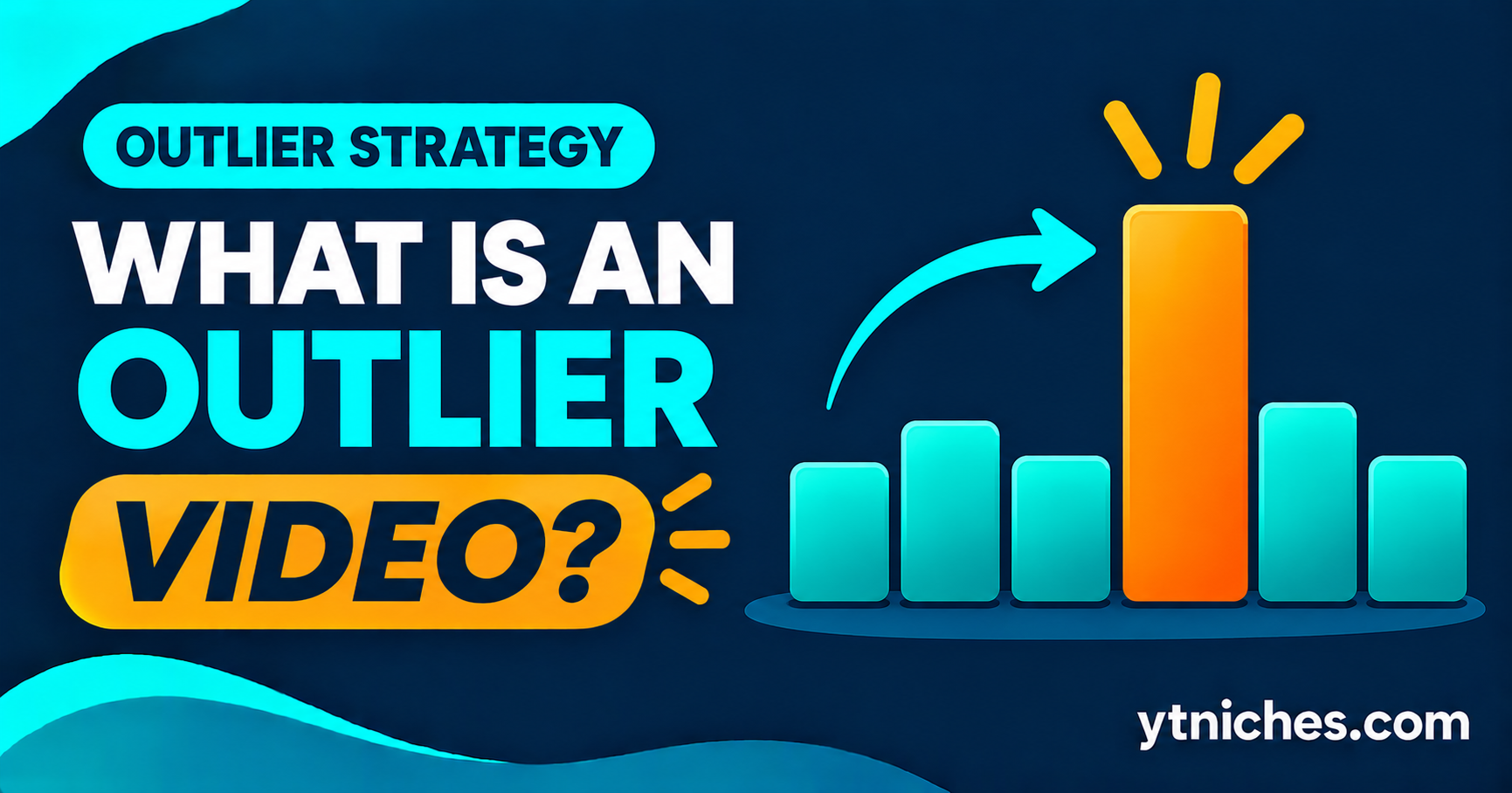
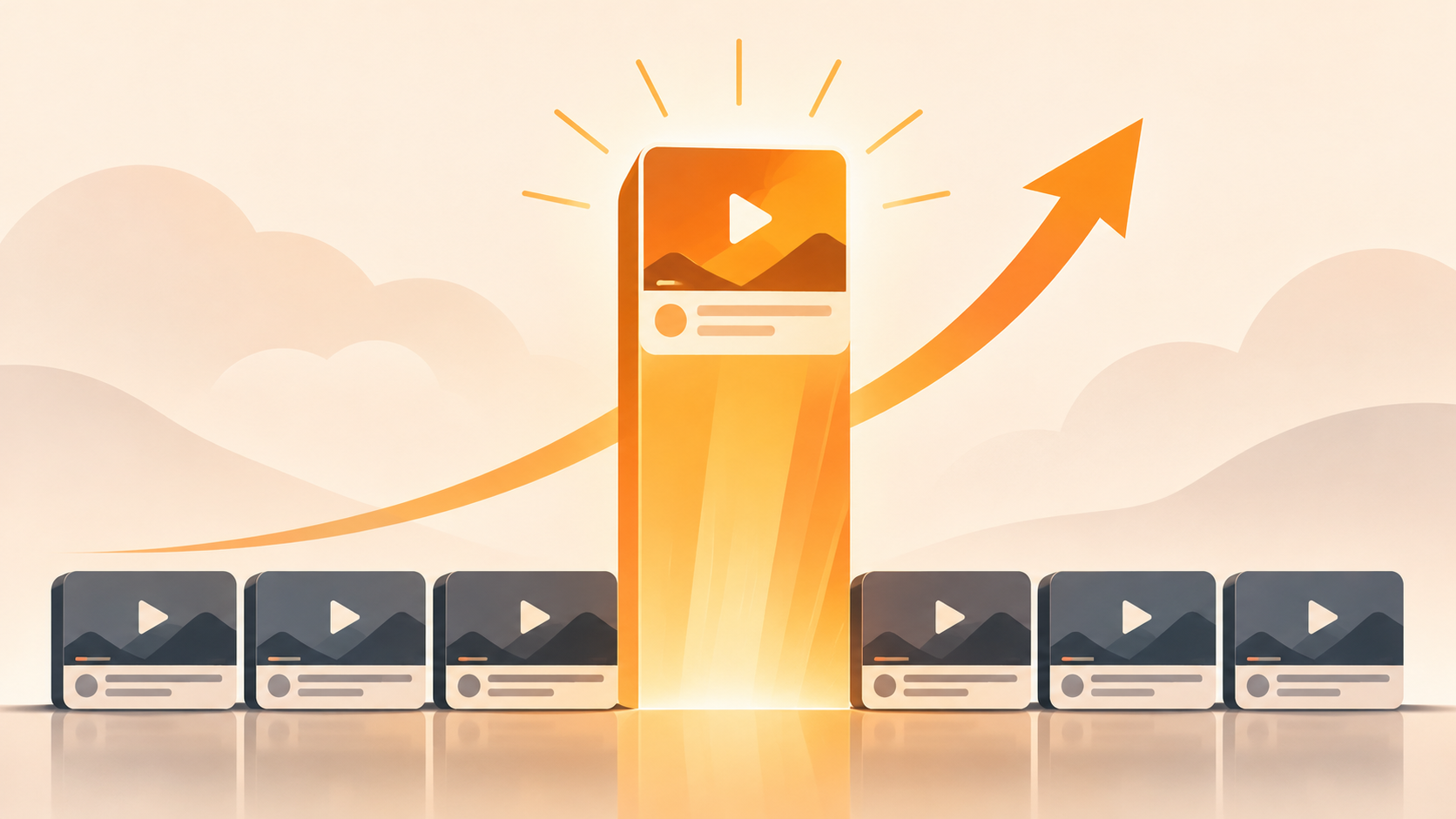
In creator intelligence, this is known as an Outlier Video.
Studying outlier videos reveals a critical truth: viral hits are rarely random accidents. They follow distinct packaging patterns, psychological curiosity gaps, and algorithmic triggers that any creator can systematically study and replicate.
What Exactly Is a YouTube Outlier? (The Math)
Most creators judge video performance purely by vanity metrics: "This video got 100k views, so it's viral!"
However, 100,000 views on a channel with 5 million subscribers is actually a dismal flop (below a 0.05x multiplier). Conversely, 30,000 views on a channel with 1,500 subscribers is a massive 20x outlier breakout.
We define an Outlier Score using a straightforward statistical ratio:
$$\text{Outlier Multiplier} = \frac{\text{Specific Video Views}}{\text{Channel's Median Average Views}}$$
- 1.0x – 1.5x: Normal baseline performance.
- 2.0x – 3.5x: Strong above-average video (solid audience interest).
- 5.0x – 10.0x+: True Outlier Breakout. The YouTube recommendation system has pushed this video far beyond the channel's subscriber base into the broad Browse and Suggested feeds of cold viewers.
Why Outliers Are the Holy Grail for Small Creators
When you are a small channel under 100k subscribers, YouTube does not owe you views. You have no loyal army of 500,000 subscribers to push your video into the algorithm.
To grow, 100% of your initial traction must come from cold traffic.
Studying your niche's outliers is the ultimate cheat code because:
- Market Demand Is Pre-Validated: You don't have to guess if people care about a topic. A 10x outlier proves that tens of thousands of cold viewers willingly clicked and watched.
- Algorithm Blueprint: The title phrasing and thumbnail imagery have already solved the Click-Through-Rate (CTR) puzzle.
- Audience Intent Is Clear: The comments section on an outlier video tells you exactly what questions, emotions, or controversies kept viewers engaged.
The 4 Psychological Anatomy Triggers of a 10x Outlier
Top-performing outlier videos almost always trigger at least one of these four fundamental human curiosities:
1. The Asymmetric Conflict (David vs. Goliath)
Humans are evolutionary wired to watch underdogs confront overwhelming power.
- Example: "How One Solo Programmer Replaced an 80-Person Engineering Team"
- Why it works: It pits a single relatable human against an entrenched, wealthy institution.
2. The Unsolved Historical or Technical Paradox
Presenting two contradictory facts creates an intolerable itch in the viewer's brain that can only be scratched by watching the video.
- Example: "The Billionaire Who Owned Nothing (The Strange Case of Chuck Feeney)"
- Why it works: Billionaires are supposed to hoard wealth; owning nothing contradicts reality. The viewer must understand how this is possible.
3. The Hidden Mechanism Behind Common Objects
Taking an ordinary, everyday occurrence and revealing the dark, complex, or fascinating engineering beneath it.
- Example: "Why Modern Airplane Windows Are Curved (And The Disasters That Forced It)"
- Why it works: Everyone has seen an airplane window, but 99% of people don't know the deadly engineering history behind its shape.
4. Extreme Stakes with a Countdown Clock
Time pressure and irreversible consequences trigger immediate emotional investment.
- Example: "The 24 Hours That Sealed the Fate of the Chernobyl Reactor"
- Why it works: High stakes, irreversible tragedy, and a ticking clock create an irresistible narrative hook.
The Proven Title Frameworks of Breakout Videos
Here are three plug-and-play title frameworks common among 5x–10x outliers:
Framework A: "The [Subject] That [Unexpected Action] (And [Dramatic Consequence])"
- Template: The [Profession/Item] That [Defied Expectation] (And [Changed Everything])
- Application: "The Polish Mathematician Who Cracked the Unbreakable Nazi Code (Before Alan Turing)"
- Application: "The Single Line of Code That Took Down the Global Banking System"
Framework B: "Why Nobody Talks About [Entity]'s Biggest [Mistake/Secret]"
- Template: Why [Respected Entity/Industry] Never Mentioned [Hidden Reality]
- Application: "Why Car Manufacturers Secretly Stopped Making Manual Transmissions"
- Application: "Why Real Estate Moguls Quietly Abandoned Commercial Offices in 2025"
Framework C: "How [Underdog] Built [Enormous Result] With [Absurdly Tiny Resource]"
- Template: How a [Small Entity] Achieved [Massive Milestone] With Zero [Expected Resource]
- Application: "How a 22-Year-Old Built a $40M Logistics Software with Zero Venture Capital"
- Application: "How Ancient Romans Moved 800-Ton Stones Without Cranes"
How to Ethically Swipe an Outlier (Without Copying)
There is a massive difference between stealing a video and swiping a proven packaging formula.
If you download someone's script or copy their thumbnail verbatim, YouTube's algorithm will penalize your channel, and your reputation will be destroyed.
Instead, use the Concept Transfer Method:
- Isolate the Core Trigger: Take a proven outlier in an adjacent niche. For instance, an outlier in the tech niche titled: "Why 90% of Solar Energy Projects Quietly Fail".
- Identify the Underlying Mechanism: The trigger is: Hidden failure rates in a popular green technology.
- Transfer to Your Niche:
- If you are in Personal Finance: "Why 85% of High-Yield Savings Strategies Quietly Backfire"
- If you are in Fitness/Health: "Why 90% of Popular Intermittent Fasting Protocols Fail After 6 Months"
- If you are in Automotive: "Why 80% of Electric Truck Fleets Are Being Quietly Replaced"
You kept the proven psychological structure, but delivered 100% original research, scriptwriting, and visuals.
3 Thumbnail Rules from Outlier Videos
Analyzing the visual assets of top 10x outliers reveals three consistent rules:
- The Rule of Visual Simplicity: Top-performing thumbnails usually have three or fewer focal points (e.g., one expressive face/object on the left, one contrasting symbol on the right, and high-contrast background).
- Never Repeat the Title: If your title says "The Fall of Boeing", your thumbnail should NOT have text that says "The Fall of Boeing". The thumbnail should feature a cracked airplane fuselage or a grounded aircraft with the word "GROUNDED" in bold red. The thumbnail and title must complement each other, not duplicate each other.
- Emotional Amplification: High-CTR thumbnails exaggerate emotional tone. Use lighting contrast (chiaroscuro), deep shadows, and stark focal illumination to make the subject pop on a small mobile screen.
Conclusion: Stop Guessing, Start Analyzing
Growing on YouTube without studying outliers is like sailing across an ocean without a compass. You are relying on pure luck.
Before writing your next video:
- Search your niche on YouTube.
- Focus on channels under 100,000 subscribers.
- Identify the 3 videos that achieved 5x or more their channel average views.
- Deconstruct their hook, unpack their curiosity gap, and build a better, deeper, more engaging version for your audience.